
Introduction
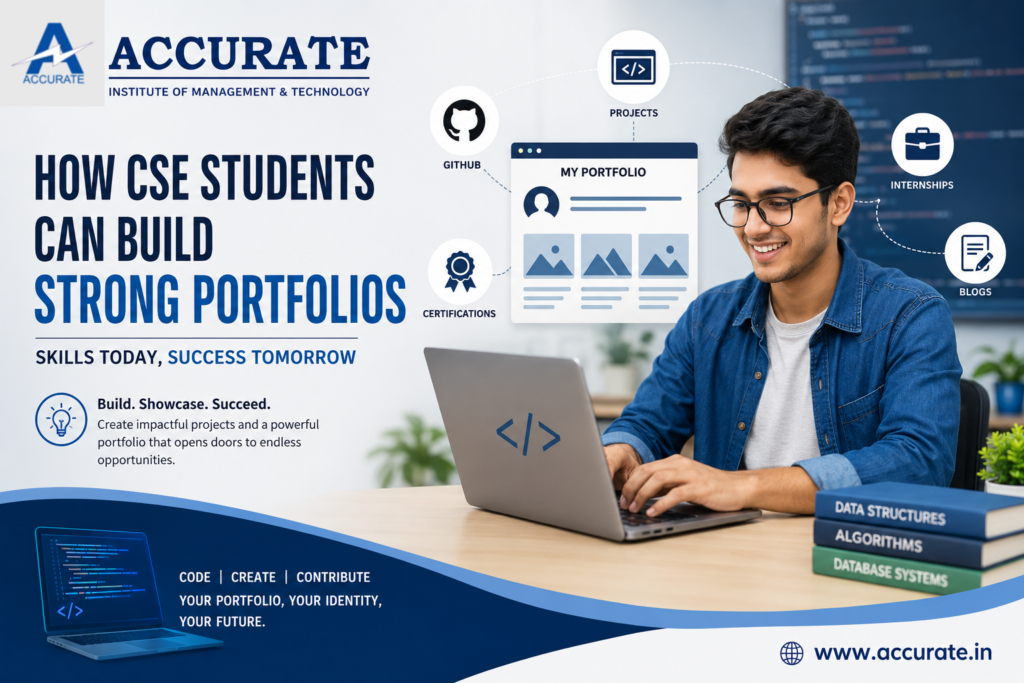
How CSE Students Can Build Strong Portfolios: In today’s highly competitive technology landscape, a degree alone is no longer enough to secure top internships and high-paying jobs. Employers increasingly look beyond academic scores and focus on practical skills, real-world projects, problem-solving abilities, and evidence of continuous learning. This is where a strong portfolio becomes a game-changer for Computer Science and Engineering (CSE) students.
A well-crafted portfolio showcases your technical expertise, projects, achievements, certifications, and professional growth. It acts as a digital resume that demonstrates what you can build, solve, and contribute. Whether you aspire to become a software developer, data scientist, AI engineer, cybersecurity analyst, cloud architect, or entrepreneur, your portfolio can significantly improve your chances of getting noticed by recruiters.
At Accurate Institute of Management & Technology, students are encouraged to combine academic excellence with practical exposure to create industry-ready portfolios. This comprehensive guide explains how CSE students can build powerful portfolios that attract recruiters, internships, and career opportunities.
What Is a Portfolio for CSE Students?
A portfolio is a collection of your technical work, achievements, projects, skills, certifications, and professional experiences presented in an organized format.
Unlike a traditional resume, a portfolio provides proof of your capabilities through actual work samples. It allows employers to evaluate your skills based on what you have created rather than what you claim to know.
A Strong CSE Portfolio Typically Includes:
- Personal introduction
- Technical skills
- Programming projects
- GitHub profile
- Certifications
- Internships
- Research papers
- Open-source contributions
- Coding achievements
- Hackathon participation
- Blogs and technical articles
- Contact information
Your portfolio should tell the story of your growth as a technology professional.
Why Is a Portfolio Important for Computer Science Students?
1. Demonstrates Practical Skills
Recruiters want candidates who can apply theoretical concepts to solve real-world problems. A portfolio showcases practical implementation of programming languages, frameworks, and technologies.
2. Improves Employability
Students with strong portfolios often receive more interview opportunities because employers can evaluate their technical capabilities before conducting interviews.
3. Builds Personal Brand
Your portfolio helps establish your professional identity online and differentiates you from thousands of other candidates.
4. Supports Internship Applications
Internship recruiters frequently review GitHub repositories, project portfolios, and technical blogs before selecting candidates.
5. Highlights Continuous Learning
Technology evolves rapidly. A portfolio demonstrates your commitment to learning emerging technologies and staying updated with industry trends.
Start Building Your Portfolio Early
One of the biggest mistakes students make is waiting until their final year to create a portfolio.
The best time to start building your portfolio is during the first year of engineering.
First Year
Focus on:
- Learning programming fundamentals
- Understanding Git and GitHub
- Building simple projects
- Participating in coding contests
Second Year
Focus on:
- Web development projects
- Data structures and algorithms
- Open-source contributions
- Technical certifications
Third Year
Focus on:
- Internships
- Advanced projects
- Cloud computing
- Machine learning
- Competitive programming
Final Year
Focus on:
- Industry-level projects
- Research work
- Portfolio refinement
- Placement preparation
Starting early gives you enough time to build an impressive collection of work.
Create a Professional GitHub Profile
GitHub is one of the most important platforms for CSE students.
Recruiters often examine GitHub profiles to evaluate coding practices, project quality, and technical consistency.
Tips for Building a Strong GitHub Profile
Maintain Clean Repositories
Your repositories should contain:
- Proper documentation
- Clear folder structure
- Meaningful commit messages
- Readable code
Add README Files
Every project should include:
- Project overview
- Features
- Installation guide
- Technologies used
- Screenshots
Be Consistent
Regular contributions indicate active learning and dedication.
Pin Best Projects
Highlight your strongest projects on your GitHub profile.
Build Meaningful Projects
Projects are the heart of any CSE portfolio.
Instead of creating dozens of basic projects, focus on a few impactful projects that solve real problems.
Project Categories for CSE Students
Web Development Projects
Examples:
- E-commerce website
- Learning management system
- Hospital management system
- Online examination portal
Mobile Applications
Examples:
- Fitness tracker
- Expense manager
- Student attendance app
- Food delivery application
Artificial Intelligence Projects
Examples:
- Chatbots
- Recommendation systems
- Image recognition models
- Sentiment analysis systems
Data Science Projects
Examples:
- Sales prediction
- Customer segmentation
- Stock market analysis
- Data visualization dashboards
Cybersecurity Projects
Examples:
- Vulnerability scanners
- Password security analyzers
- Network monitoring tools
Cloud Computing Projects
Examples:
- Cloud storage systems
- Serverless applications
- AWS deployment projects
Employers value quality and problem-solving more than project quantity.
Create a Personal Portfolio Website
A personal website creates a professional online presence and helps recruiters access your work easily.
Essential Sections
Home Page
Include:
- Name
- Professional headline
- Career objective
About Me
Describe:
- Educational background
- Interests
- Career aspirations
Skills Section
Mention:
- Programming languages
- Frameworks
- Databases
- Tools
Projects Section
Include:
- Project descriptions
- Technologies used
- GitHub links
- Live demos
Certifications
Showcase completed courses and certifications.
Contact Information
Provide:
- Email address
- LinkedIn profile
- GitHub profile
Recommended Technologies
- HTML
- CSS
- JavaScript
- React
- Next.js
- Tailwind CSS
A portfolio website demonstrates both technical and professional capabilities.
Develop Strong Problem-Solving Skills
Technical interviews often focus on problem-solving ability.
Platforms to Practice
- LeetCode
- HackerRank
- CodeChef
- Codeforces
- GeeksforGeeks
Topics to Master
- Arrays
- Linked Lists
- Trees
- Graphs
- Dynamic Programming
- Recursion
- Sorting Algorithms
Add coding achievements and rankings to your portfolio.
Earn Industry-Recognized Certifications
Certifications validate your knowledge and strengthen your portfolio.
Popular Certification Areas
Programming
- Python
- Java
- C++
- JavaScript
Cloud Computing
- AWS
- Microsoft Azure
- Google Cloud
Data Science
- Machine Learning
- Data Analytics
- Deep Learning
Cybersecurity
- Ethical Hacking
- Security Fundamentals
Web Development
- Full Stack Development
- Front-End Development
Certifications from reputable organizations increase credibility.
Participate in Hackathons
Hackathons provide opportunities to solve real-world problems under time constraints.
Benefits of Hackathons
- Practical experience
- Team collaboration
- Networking opportunities
- Industry exposure
- Portfolio-worthy projects
What to Showcase
- Participation certificates
- Awards
- Project demonstrations
- Team achievements
Recruiters appreciate students who actively engage in innovation challenges.
Contribute to Open Source Projects
Open-source contributions demonstrate collaboration and software development skills.
Benefits
- Real-world coding experience
- Exposure to professional workflows
- Community engagement
- Enhanced GitHub profile
Platforms
- GitHub
- GitLab
- Apache Foundation Projects
Even small contributions can significantly strengthen your portfolio.
Build a Strong LinkedIn Profile
LinkedIn serves as your professional networking platform.
Profile Optimization Tips
Professional Headline
Example:
Computer Science Engineering Student | Web Developer | Machine Learning Enthusiast
About Section
Highlight:
- Skills
- Career goals
- Technical interests
Add Portfolio Links
Include:
- GitHub
- Portfolio website
- Projects
Request Recommendations
Recommendations from professors and internship mentors increase credibility.
Write Technical Blogs
Technical writing demonstrates communication skills and subject expertise.
Blog Topics
- Programming tutorials
- AI concepts
- Web development guides
- Cybersecurity practices
- Coding interview preparation
Platforms
- Medium
- Dev.to
- Hashnode
- Personal website
Employers value candidates who can explain technical concepts clearly.
Showcase Internships and Training
Internships provide practical industry exposure.
Include
- Organization name
- Duration
- Responsibilities
- Technologies used
- Key achievements
Highlight Impact
Instead of writing:
“Worked on web development.”
Write:
“Developed responsive user interfaces using React, improving application performance and user experience.”
Quantifiable achievements make stronger impressions.
Include Research and Innovation Work
Students interested in higher education, AI, or R&D careers should include research activities.
Examples
- Published papers
- Patent filings
- Research projects
- Conference presentations
Research demonstrates analytical thinking and innovation capabilities.
Showcase Soft Skills
Technical skills are important, but employers also value soft skills.
Mention
- Communication
- Leadership
- Teamwork
- Time management
- Problem-solving
- Adaptability
Support these claims with examples from projects, hackathons, and internships.
Common Portfolio Mistakes to Avoid
Too Many Basic Projects
Avoid showcasing multiple beginner-level projects.
Poor Documentation
Projects without documentation appear incomplete.
Outdated Content
Keep projects and certifications updated.
Copy-Pasted Work
Recruiters can identify copied projects easily.
Broken Links
Regularly test GitHub and website links.
Lack of Personal Branding
Your portfolio should reflect your unique strengths and interests.
Portfolio Checklist for CSE Students
Before applying for internships or placements, ensure your portfolio includes:
✓ Professional Resume
✓ GitHub Profile
✓ Portfolio Website
✓ 3–5 High-Quality Projects
✓ LinkedIn Profile
✓ Technical Certifications
✓ Coding Achievements
✓ Internship Experience
✓ Technical Blogs
✓ Contact Information
✓ Open-Source Contributions
✓ Research Work (if applicable)
How Accurate Institute of Management & Technology Helps Students Build Strong Portfolios
Accurate Institute of Management & Technology focuses on holistic student development through:
- Industry-oriented curriculum
- Technical workshops
- Coding competitions
- Hackathons
- Internship opportunities
- Industry expert sessions
- Placement training
- Project-based learning
- Innovation and entrepreneurship support
These initiatives help students develop practical skills and create industry-ready portfolios that align with current market demands.
Future Trends Students Should Include in Their Portfolios
Emerging technologies are shaping the future of computer science.
Students should gain exposure to:
- Artificial Intelligence
- Machine Learning
- Data Science
- Cloud Computing
- Cybersecurity
- Blockchain
- Internet of Things (IoT)
- Generative AI
- DevOps
- Full Stack Development
Including projects related to these domains can significantly enhance career prospects.
Conclusion
A strong portfolio is one of the most valuable career assets for Computer Science and Engineering students. It goes beyond grades and showcases real-world skills, technical expertise, creativity, and professional growth.
By building meaningful projects, maintaining an active GitHub profile, earning certifications, participating in hackathons, contributing to open-source communities, and creating a professional online presence, students can significantly improve their employability and stand out in competitive recruitment processes.
At Accurate Institute of Management & Technology, students are encouraged to develop both technical competence and practical experience, enabling them to build impressive portfolios that attract internships, placements, and long-term career opportunities in the rapidly evolving technology industry.
Frequently Asked Questions (FAQs)
1. What should a CSE student include in a portfolio?
A CSE portfolio should include projects, GitHub profile, technical skills, certifications, internships, coding achievements, technical blogs, LinkedIn profile, and contact information.
2. How many projects should be in a CSE portfolio?
Quality matters more than quantity. Three to five well-documented and impactful projects are usually sufficient.
3. Is GitHub important for CSE students?
Yes. GitHub helps recruiters evaluate coding skills, project quality, collaboration ability, and consistency in software development.
4. When should students start building a portfolio?
Students should ideally start during the first year of engineering and continuously improve their portfolio throughout their academic journey.
5. Do certifications improve a portfolio?
Yes. Certifications from recognized platforms validate technical knowledge and demonstrate commitment to continuous learning.
6. Can hackathons help build a stronger portfolio?
Absolutely. Hackathons showcase innovation, teamwork, problem-solving abilities, and practical project experience.
7. Is a personal website necessary for CSE students?
While not mandatory, a personal portfolio website significantly enhances professional visibility and helps recruiters access projects easily.
8. What are the best platforms for coding practice?
Popular platforms include LeetCode, HackerRank, CodeChef, Codeforces, and GeeksforGeeks.
9. How can open-source contributions benefit students?
Open-source contributions provide real-world development experience, improve collaboration skills, and strengthen GitHub profiles.
10. Why do recruiters prefer candidates with strong portfolios?
Portfolios provide evidence of practical skills, technical competence, creativity, and industry readiness beyond academic qualifications.