
Introduction
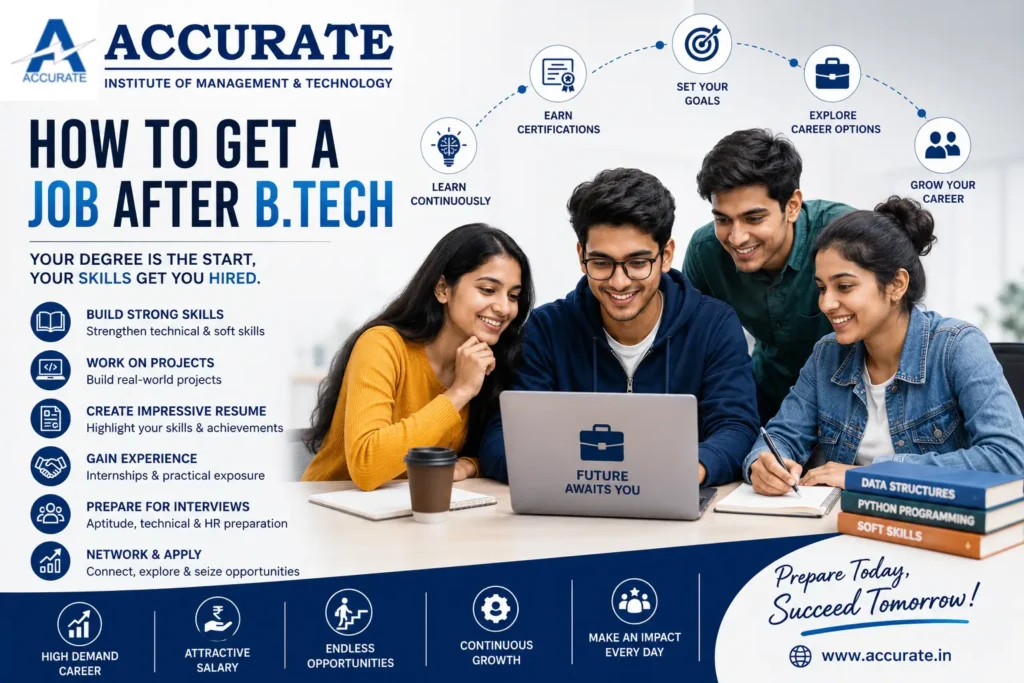
How to Get a Job After B.Tech: Completing a Bachelor of Technology (B.Tech) degree is a significant achievement, but for many students, the next challenge begins immediately after graduation—finding the right job. In today’s competitive employment landscape, securing a good position requires more than academic qualifications. Employers seek candidates who possess technical expertise, practical experience, problem-solving abilities, communication skills, and industry readiness.
Many engineering graduates often ask, “How do I get a job after B.Tech?” The answer lies in a combination of skill development, strategic planning, networking, internships, certifications, and effective job search techniques.
With technology transforming industries and creating new career opportunities, B.Tech graduates have access to diverse roles in software development, data science, artificial intelligence, cybersecurity, cloud computing, electronics, mechanical engineering, civil engineering, and many other sectors.
At Accurate Institute of Management & Technology, students are equipped with industry-oriented education, practical training, and career development support to prepare them for successful professional journeys. This comprehensive guide explores proven strategies to help engineering graduates secure rewarding jobs after B.Tech.
Why Finding a Job After B.Tech Requires More Than a Degree
A B.Tech degree provides foundational technical knowledge, but employers increasingly evaluate candidates based on practical capabilities.
Today’s recruiters look for:
- Technical proficiency
- Project experience
- Communication skills
- Problem-solving ability
- Team collaboration
- Industry exposure
- Adaptability
- Professional attitude
Graduates who combine academic knowledge with practical skills often enjoy better placement opportunities.
Understanding the Current Job Market for B.Tech Graduates
Technology-driven industries continue to create new employment opportunities.
High-Demand Fields Include:
- Software Development
- Artificial Intelligence
- Data Science
- Machine Learning
- Cybersecurity
- Cloud Computing
- Internet of Things (IoT)
- DevOps
- Robotics
- Full Stack Development
- Business Analytics
Engineering graduates who align their skills with industry demand significantly improve their employability.
Step 1: Identify Your Career Goals
Before applying for jobs, students should define their career objectives.
Ask yourself:
- Which industry interests me?
- What technical skills do I enjoy using?
- Do I prefer coding, analytics, design, or management?
- Am I interested in startups or multinational companies?
- What long-term career path do I want?
Having clear goals helps you focus your learning and job search efforts.
Step 2: Build Strong Technical Skills
Technical expertise remains one of the most important factors in hiring decisions.
For Computer Science and IT Students
Focus on:
- Programming Languages
- Data Structures
- Algorithms
- Databases
- Operating Systems
- Web Development
- Cloud Computing
Popular languages include:
- Python
- Java
- C++
- JavaScript
For Mechanical Engineering Students
Learn:
- AutoCAD
- SolidWorks
- CATIA
- MATLAB
- Manufacturing Processes
For Civil Engineering Students
Develop expertise in:
- AutoCAD
- STAAD Pro
- Revit
- Project Management Tools
For Electronics and Electrical Students
Master:
- Embedded Systems
- VLSI Design
- PLC Programming
- Circuit Design
Industry-specific technical skills improve job readiness.
Step 3: Create an Impressive Resume
Your resume creates the first impression.
Include:
Professional Summary
A concise overview of your skills and career objectives.
Educational Details
Highlight academic achievements.
Technical Skills
Mention relevant tools, languages, and technologies.
Projects
Showcase practical applications of your knowledge.
Certifications
Demonstrate continuous learning.
Internships
Highlight industry exposure.
Achievements
Include competitions, hackathons, and awards.
Resume Tips
- Keep it concise
- Use action-oriented language
- Customize for each role
- Highlight measurable achievements
A well-crafted resume significantly increases interview chances.
Step 4: Build a Professional Portfolio
A portfolio provides evidence of your skills.
Include:
- Projects
- GitHub repositories
- Certifications
- Internship experiences
- Research work
- Technical blogs
Why Portfolios Matter
Recruiters often review portfolios before conducting interviews.
Students with strong portfolios stand out from other applicants.
Step 5: Gain Internship Experience
Internships bridge the gap between academics and industry.
Benefits of Internships
- Real-world exposure
- Practical skills development
- Networking opportunities
- Better placement prospects
Even short-term internships can significantly strengthen your profile.
Step 6: Earn Industry-Relevant Certifications
Certifications validate technical expertise.
Popular Certifications for Engineering Students
Software and IT
- AWS Cloud Practitioner
- Microsoft Azure Fundamentals
- Google Cloud Certifications
Data Science
- IBM Data Science Professional Certificate
- Google Data Analytics Certificate
Cybersecurity
- Certified Ethical Hacker (CEH)
- CompTIA Security+
Project Management
- Agile Fundamentals
- Scrum Certifications
Certifications help demonstrate commitment to professional growth.
Step 7: Develop Strong Communication Skills
Technical knowledge alone is not enough.
Employers value candidates who can:
- Present ideas clearly
- Collaborate effectively
- Participate in discussions
- Write professional emails
- Communicate with clients
Ways to Improve Communication
- Participate in group discussions
- Attend workshops
- Practice public speaking
- Engage in presentations
Strong communication skills improve interview performance and workplace success.
Step 8: Master Aptitude and Placement Preparation
Many companies use aptitude tests during recruitment.
Common Areas
- Quantitative Aptitude
- Logical Reasoning
- Verbal Ability
- Analytical Thinking
Preparation Platforms
- IndiaBix
- HackerRank
- GeeksforGeeks
- PrepInsta
Consistent practice improves performance in placement assessments.
Step 9: Strengthen Coding and Problem-Solving Skills
For technology-related roles, coding ability is essential.
Practice Platforms
- LeetCode
- CodeChef
- Codeforces
- HackerRank
Important Topics
- Arrays
- Linked Lists
- Trees
- Graphs
- Dynamic Programming
- Sorting Algorithms
Recruiters often assess problem-solving capabilities during technical interviews.
Step 10: Build a Professional LinkedIn Profile
LinkedIn serves as a digital professional identity.
Profile Optimization Tips
Professional Headline
Example:
B.Tech Graduate | Software Developer | Python Enthusiast
About Section
Highlight:
- Skills
- Interests
- Career goals
Add:
- Certifications
- Projects
- Achievements
- Internship experience
Networking on LinkedIn can lead to valuable job opportunities.
Step 11: Participate in Hackathons and Competitions
Hackathons demonstrate innovation and teamwork.
Benefits
- Practical learning
- Industry exposure
- Networking opportunities
- Portfolio enhancement
Recruiters often appreciate candidates who actively participate in technology events.
Step 12: Build a Strong Professional Network
Networking can accelerate job searches.
Connect With
- Alumni
- Professors
- Industry professionals
- Recruiters
Attend
- Career fairs
- Technical conferences
- Industry seminars
- Workshops
Many opportunities arise through professional connections.
Step 13: Apply Strategically for Jobs
Avoid applying randomly.
Research Companies
Understand:
- Company culture
- Job requirements
- Industry focus
Customize Applications
Tailor resumes and cover letters according to specific roles.
Use Trusted Platforms
- LinkedIn Jobs
- Naukri
- Indeed
- Foundit
- Company Career Pages
Targeted applications often produce better results.
Step 14: Prepare Thoroughly for Interviews
Interview preparation is critical.
Technical Interviews
Review:
- Core engineering concepts
- Projects
- Programming fundamentals
- Industry-specific topics
HR Interviews
Prepare for questions like:
- Tell me about yourself.
- Why should we hire you?
- What are your strengths and weaknesses?
- Where do you see yourself in five years?
Practice improves confidence and performance.
Step 15: Stay Updated With Industry Trends
Technology evolves rapidly.
Follow developments in:
- Artificial Intelligence
- Cloud Computing
- Data Science
- Cybersecurity
- Automation
- Robotics
Continuous learning increases long-term employability.
Emerging Career Opportunities After B.Tech
Artificial Intelligence Engineer
Design intelligent systems using machine learning and deep learning technologies.
Data Scientist
Analyze complex data to support strategic decision-making.
Cloud Engineer
Develop and manage cloud-based infrastructure.
Cybersecurity Analyst
Protect systems and networks from cyber threats.
Full Stack Developer
Build complete web applications using front-end and back-end technologies.
DevOps Engineer
Improve software deployment and operational efficiency.
Product Engineer
Develop innovative products and technology solutions.
Common Mistakes Students Make During Job Searches
Waiting Until Final Semester
Start preparing early.
Ignoring Practical Skills
Employers value hands-on experience.
Weak Resume
Poor resumes reduce interview opportunities.
Lack of Networking
Many students underestimate professional connections.
Applying Without Preparation
Interview readiness is essential.
Not Building a Portfolio
Portfolios showcase actual abilities.
Avoiding these mistakes can significantly improve employment prospects.
How Accurate Institute of Management & Technology Supports Student Placements
Accurate Institute of Management & Technology focuses on preparing students for successful careers through:
- Industry-oriented curriculum
- Technical training programs
- Internship opportunities
- Placement preparation sessions
- Communication skills development
- Industry expert interactions
- Coding competitions
- Career counseling
- Professional development workshops
These initiatives help students become industry-ready professionals capable of succeeding in competitive job markets.
Future Job Market Trends for Engineering Graduates
Several emerging fields are expected to generate substantial opportunities:
- Artificial Intelligence
- Machine Learning
- Data Science
- Cloud Computing
- Cybersecurity
- Blockchain
- Internet of Things
- Robotics
- Automation
- Green Technologies
Students who proactively develop skills in these domains will be well-positioned for future careers.
Conclusion
Securing a job after B.Tech requires a combination of technical expertise, practical experience, communication skills, strategic planning, and continuous learning. While academic performance provides a foundation, employers increasingly prioritize industry-ready skills and real-world problem-solving abilities.
By developing technical competencies, building strong portfolios, earning certifications, completing internships, networking effectively, and preparing thoroughly for interviews, engineering graduates can significantly enhance their employability.
At Accurate Institute of Management & Technology, students receive the knowledge, training, and industry exposure needed to build successful careers across various engineering and technology domains. With the right preparation and mindset, every B.Tech graduate can unlock exciting opportunities and achieve long-term professional success.
Frequently Asked Questions (FAQs)
1. How can I get a job immediately after B.Tech?
Develop technical skills, complete internships, build a strong resume, create a portfolio, and actively apply through professional job platforms.
2. Which skills are most important for B.Tech graduates?
Programming, problem-solving, communication, teamwork, analytical thinking, and industry-specific technical skills are highly valued.
3. Is internship experience necessary for getting a job?
While not mandatory, internships significantly improve employability by providing practical industry exposure.
4. How important is LinkedIn for engineering students?
LinkedIn helps students network with recruiters, showcase achievements, and discover job opportunities.
5. What certifications help engineering graduates get jobs?
Cloud computing, cybersecurity, data science, programming, and project management certifications are highly beneficial.
6. How many projects should be included in a resume?
Three to five well-documented projects demonstrating technical expertise are usually sufficient.
7. What are the best job portals for B.Tech graduates?
LinkedIn Jobs, Naukri, Indeed, Foundit, and company career pages are widely used.
8. How can I improve my interview performance?
Practice technical concepts, mock interviews, communication skills, and problem-solving exercises.
9. What are the top career options after B.Tech?
Software development, data science, AI engineering, cybersecurity, cloud computing, DevOps, and product engineering are among the top options.
10. Does a portfolio help in getting a job after B.Tech?
Yes. A strong portfolio provides proof of skills, projects, and practical experience, helping candidates stand out during recruitment.