
Securing a good placement is one of the primary goals of engineering students. In today’s competitive job market, academic performance alone is not enough to attract top recruiters. Companies are looking for graduates who possess a combination of technical expertise, practical experience, communication skills, adaptability, and problem-solving abilities. As industries rapidly adopt Artificial Intelligence, Cloud Computing, Data Science, Cyber Security, Automation, and Digital Transformation, employers expect candidates to be industry-ready from the very beginning of their careers.
Placement success depends on much more than a degree. Students who continuously develop technical skills, participate in projects, complete internships, earn certifications, and improve soft skills stand out during campus recruitment. They demonstrate confidence, professionalism, and the ability to contribute effectively in modern workplaces.
At Accurate Institute of Management & Technology, engineering education focuses on preparing students for successful careers through project-based learning, technical workshops, industry interaction, internships, placement training, communication development, and career guidance. This holistic approach helps students build the competencies that leading employers value.
This comprehensive guide explores the most important skills that improve placement chances, explains why these skills matter, and provides practical strategies for engineering students to become highly employable professionals.
Quick Answer: What Skills Improve Placement Chances?
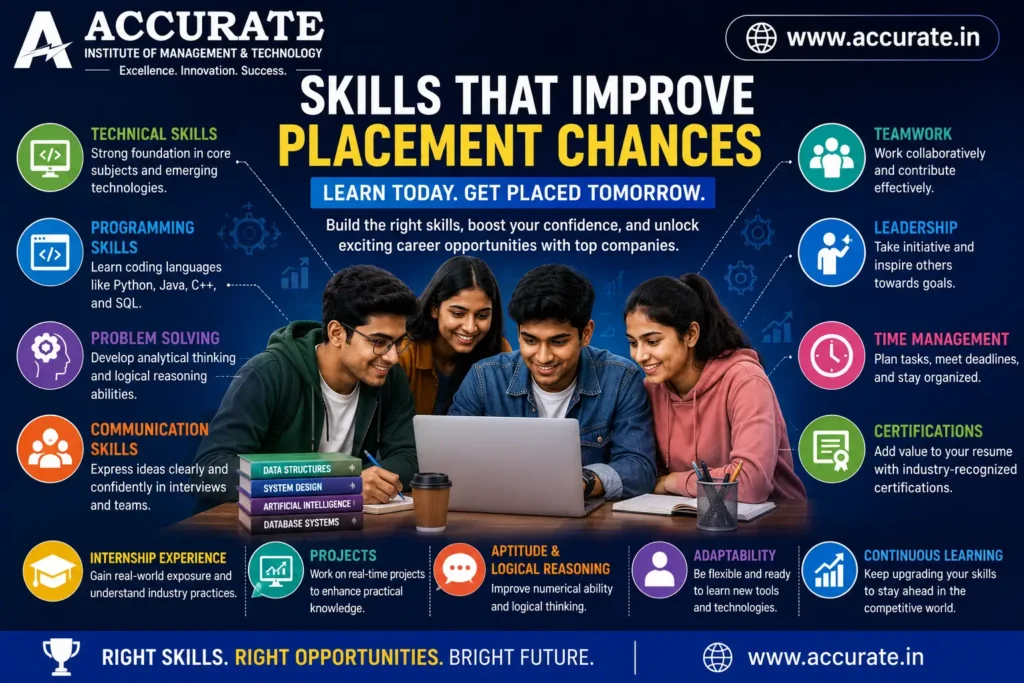
The most valuable placement skills include:
- Technical Knowledge
- Programming Skills
- Problem-Solving Ability
- Communication Skills
- Aptitude and Logical Reasoning
- Teamwork
- Leadership
- Time Management
- Internship Experience
- Project Development
- Adaptability
- Interview Skills
Students who combine technical competence with professional skills significantly improve their placement opportunities.
Why Skills Matter More Than Marks
Good academic performance demonstrates discipline and subject knowledge, but recruiters also evaluate whether a student can apply that knowledge in practical situations.
Employers seek candidates who can:
- Solve Real Problems
- Learn Quickly
- Work in Teams
- Communicate Clearly
- Adapt to Technology
Skill development transforms students into industry-ready professionals.
Technical Skills
Technical skills remain the foundation of engineering careers.
Students should build expertise in:
- Programming
- Data Structures
- Operating Systems
- Database Management
- Networking
- Software Development
A strong technical foundation increases confidence during technical interviews.
Programming Skills
Programming is essential for many engineering disciplines.
Popular languages include:
- Python
- Java
- C++
- JavaScript
Students should practice writing efficient and well-structured code while understanding algorithms and debugging techniques.
Data Structures and Algorithms
Many companies assess problem-solving through coding challenges.
Important topics include:
- Arrays
- Linked Lists
- Trees
- Graphs
- Sorting
- Searching
Regular coding practice improves interview performance.
Communication Skills
Excellent communication is one of the most important employability skills.
Students should improve:
- Spoken English
- Presentation Skills
- Business Communication
- Active Listening
Clear communication enables effective collaboration and professional growth.
Also Read:
Problem-Solving Skills
Engineering graduates are expected to solve practical challenges.
Students should develop the ability to:
- Analyze Situations
- Identify Root Causes
- Evaluate Solutions
- Make Logical Decisions
Problem-solving abilities are tested throughout recruitment processes.
Aptitude and Logical Reasoning
Many placement examinations include aptitude tests.
Students should strengthen:
- Quantitative Aptitude
- Logical Reasoning
- Analytical Thinking
- Numerical Ability
Regular practice improves speed and accuracy.
Teamwork and Collaboration
Modern organizations work in collaborative environments.
Engineering students should learn to:
- Share Ideas
- Respect Different Perspectives
- Resolve Conflicts
- Support Team Objectives
Teamwork is essential for project success.
Leadership Skills
Leadership is valuable even for entry-level professionals.
Students can develop leadership by:
- Managing Projects
- Organizing Events
- Leading Technical Teams
- Participating in Student Clubs
Leadership demonstrates responsibility and initiative.
Time Management
Balancing academics, projects, internships, and extracurricular activities requires effective planning.
Time management helps students:
- Meet Deadlines
- Reduce Stress
- Improve Productivity
Employers value candidates who manage responsibilities efficiently.
Adaptability and Continuous Learning
Technology changes rapidly.
Successful engineers continuously learn new tools, programming languages, and technologies.
Adaptability demonstrates a willingness to grow with industry requirements.
Practical Learning
Hands-on learning improves technical competence.
Students should actively participate in:
- Laboratory Sessions
- Live Projects
- Workshops
- Industrial Visits
Practical exposure builds confidence and problem-solving abilities.
Project Development
Projects showcase a student’s practical capabilities.
Examples include:
- Web Applications
- Mobile Apps
- AI Solutions
- Robotics Systems
- IoT Projects
Well-executed projects strengthen resumes and interview discussions.
Internship Experience
Internships provide valuable workplace exposure.
Benefits include:
- Industry Knowledge
- Professional Networking
- Technical Experience
- Workplace Discipline
Many recruiters give preference to candidates with internship experience.
Industry Certifications
Professional certifications demonstrate commitment to learning.
Useful certification areas include:
- Cloud Computing
- Data Science
- Artificial Intelligence
- Cyber Security
- Programming
Certifications add credibility to resumes.
Resume Building Skills
A strong resume should highlight:
- Academic Achievements
- Projects
- Technical Skills
- Certifications
- Internships
- Leadership Activities
A professional resume creates a positive first impression.
Interview Skills
Students should prepare for:
Technical Interviews
Focus on subject knowledge and coding.
HR Interviews
Demonstrate communication, confidence, and career goals.
Group Discussions
Practice expressing ideas clearly while respecting others’ viewpoints.
Interview preparation significantly improves placement performance.
Networking Skills
Professional networking helps students:
- Learn from Industry Experts
- Discover Career Opportunities
- Build Professional Relationships
Networking begins during college through seminars, workshops, and internships.
Digital Skills
Modern workplaces expect digital proficiency.
Students should understand:
- Office Productivity Tools
- Online Collaboration Platforms
- Digital Communication
These skills improve workplace efficiency.
Emotional Intelligence
Employers increasingly value emotional intelligence.
Students should develop:
- Self-Awareness
- Empathy
- Stress Management
- Positive Attitude
Emotional intelligence supports teamwork and leadership.
Creativity and Innovation
Innovation helps engineers solve complex challenges.
Students should:
- Think Creatively
- Explore New Ideas
- Develop Practical Solutions
Innovation contributes to long-term career growth.
Importance of Emerging Technologies
Students should stay updated with:
- Artificial Intelligence
- Machine Learning
- Data Science
- Cloud Computing
- Internet of Things
- Cyber Security
Knowledge of emerging technologies improves employability.
Benefits of Participating in Technical Events
Participation in:
- Hackathons
- Coding Competitions
- Robotics Events
- Technical Workshops
enhances technical exposure and confidence.
Common Placement Mistakes to Avoid
Students should avoid:
- Ignoring Soft Skills
- Weak Resume Preparation
- Lack of Interview Practice
- Limited Practical Experience
- Poor Time Management
Addressing these areas improves placement outcomes.
How Engineering Students Can Improve Placement Chances
Students should:
- Practice Coding Daily
- Build Real Projects
- Complete Internships
- Earn Industry Certifications
- Improve Communication
- Participate in Workshops
- Stay Updated with Technology
Consistent effort leads to long-term success.
Also Read: Accurate B.Tech Data Science Admission | Data Science Engineering Greater Noida
How Accurate Institute Supports Student Placements
At Accurate Institute of Management & Technology, students receive comprehensive placement preparation through industry-focused initiatives.
Industry-Oriented Curriculum
Courses align with current employer requirements.
Technical Workshops
Students gain exposure to emerging technologies and practical applications.
Project-Based Learning
Hands-on projects strengthen technical understanding.
Internship Opportunities
Industry experience prepares students for professional careers.
Communication and Soft Skills Training
Students improve confidence, presentations, and interpersonal communication.
Career Guidance
Experts provide resume building, interview preparation, and career planning support.
Placement Assistance
Campus recruitment activities connect students with leading organizations.
Future Skills That Employers Will Value
The future workforce will increasingly require:
- Artificial Intelligence
- Data Analytics
- Cyber Security
- Cloud Computing
- Automation
- Digital Collaboration
Students who continuously update their skills will remain competitive.
What skills improve placement chances for engineering students?
Engineering students improve their placement chances by developing technical knowledge, programming skills, communication abilities, problem-solving, internships, project experience, certifications, aptitude, teamwork, leadership, and interview confidence.
Conclusion
Placement success depends on continuous learning, practical exposure, and the ability to apply engineering knowledge effectively. While academic performance remains important, employers increasingly value technical expertise, communication skills, adaptability, leadership, and real-world experience.
Engineering students who actively participate in projects, internships, technical workshops, certifications, and placement training significantly improve their employability. Developing both technical and professional competencies creates strong career opportunities across industries.
At Accurate Institute of Management & Technology, students receive industry-oriented education, practical learning experiences, placement preparation, career guidance, and skill development support that prepare them for successful engineering careers. Through continuous improvement and commitment to learning, students can confidently pursue rewarding opportunities with leading organizations.
Building the right skills today is the foundation for achieving long-term career success tomorrow.
Frequently Asked Questions (FAQs)
What skills are most important for engineering placements?
Technical knowledge, programming, communication, problem-solving, teamwork, internships, projects, and interview skills.
Do internships improve placement chances?
Yes. Internships provide industry exposure and practical experience that employers highly value.
Why are communication skills important?
Strong communication helps candidates perform better in interviews, teamwork, presentations, and professional interactions.
Are certifications useful for placements?
Yes. Industry certifications demonstrate technical competence and commitment to continuous learning.
How can engineering students prepare for campus placements?
Practice coding, improve aptitude, build projects, complete internships, strengthen communication, and attend mock interviews.
What technologies should students learn?
Artificial Intelligence, Data Science, Cloud Computing, Cyber Security, Machine Learning, and Internet of Things are valuable areas.
How does Accurate Institute help students with placements?
The institute provides technical workshops, internships, project-based learning, placement training, communication development, and career guidance.
What is the best way to improve employability?
Develop technical expertise, gain practical experience, improve soft skills, earn certifications, and stay updated with emerging technologies.