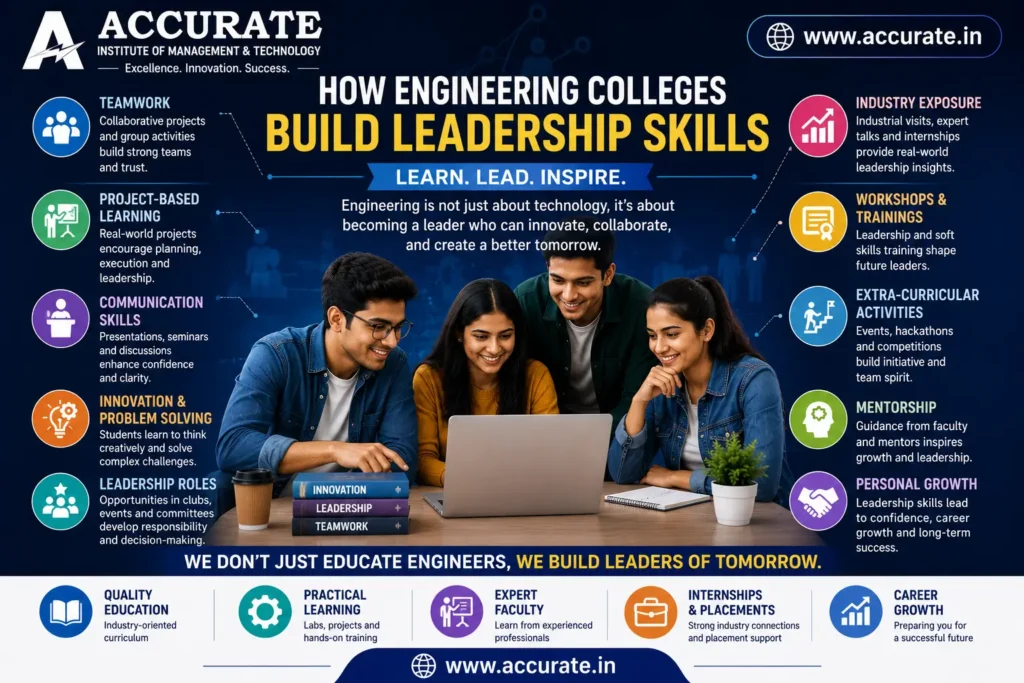

Engineering is no longer limited to designing machines, writing code, or solving technical problems. Today’s engineering professionals are expected to lead teams, manage projects, communicate effectively, make strategic decisions, and drive innovation. As industries continue to evolve through Artificial Intelligence, Data Science, Robotics, Cyber Security, Cloud Computing, and Digital Transformation, leadership has become one of the most valuable skills for engineering graduates.
Engineering colleges play a vital role in shaping future leaders by creating an environment where students develop technical expertise alongside communication, teamwork, problem-solving, critical thinking, and decision-making abilities. Modern engineering education emphasizes project-based learning, industry interaction, technical workshops, innovation, entrepreneurship, internships, and extracurricular activities that help students become confident leaders.
Leadership is not only about managing people. It is about taking initiative, solving challenges, motivating teams, adapting to change, and making responsible decisions. Engineering students who develop leadership skills are better prepared for placements, higher education, entrepreneurship, and managerial roles in global organizations.
At Accurate Institute of Management & Technology, leadership development is an integral part of engineering education. Through practical learning, technical clubs, industrial visits, seminars, innovation activities, and student engagement programs, the institute prepares students to become capable professionals and future industry leaders.
This comprehensive guide explains how engineering colleges build leadership skills, why leadership is important for engineering careers, and how students can strengthen these qualities during their academic journey.
Quick Answer: How Do Engineering Colleges Build Leadership Skills?
Engineering colleges build leadership skills through:
- Project-Based Learning
- Team Assignments
- Technical Workshops
- Student Clubs
- Industrial Visits
- Internships
- Innovation Challenges
- Hackathons
- Research Activities
- Entrepreneurship Programs
- Communication Training
- Campus Events
These activities help students develop confidence, responsibility, teamwork, decision-making, and professional leadership.
Why Leadership Skills Matter for Engineers
Modern engineers work in collaborative environments where technical knowledge alone is not enough.
Leadership enables engineers to:
- Manage Projects
- Coordinate Teams
- Solve Complex Problems
- Communicate Ideas Clearly
- Adapt to Changing Technologies
- Inspire Innovation
Strong leadership skills improve career growth and employability.
Leadership in Modern Engineering Careers
Engineering professionals often progress into roles such as:
- Project Manager
- Team Leader
- Engineering Manager
- Product Manager
- Technical Architect
- Research Lead
- Startup Founder
Leadership capabilities help professionals transition into these positions successfully.
Project-Based Learning Builds Leadership
Engineering colleges encourage students to work on real-world projects.
During projects, students learn to:
- Plan Tasks
- Assign Responsibilities
- Meet Deadlines
- Resolve Challenges
- Coordinate Team Members
Project-based learning naturally develops leadership qualities.
Teamwork Encourages Leadership Development
Most engineering projects require collaboration.
Students learn how to:
- Work with Diverse Teams
- Respect Different Opinions
- Resolve Conflicts
- Support Team Goals
Effective teamwork strengthens leadership abilities.
Technical Workshops Improve Confidence
Workshops expose students to emerging technologies such as:
- Artificial Intelligence
- Cloud Computing
- Robotics
- Data Science
- Cyber Security
- Internet of Things
Presenting ideas, participating in discussions, and solving technical challenges during workshops improve confidence and communication.
Student Clubs and Technical Societies
Engineering colleges often establish:
- Coding Clubs
- Robotics Clubs
- Innovation Cells
- Entrepreneurship Cells
- Technical Forums
Students managing these clubs develop organizational and leadership skills.
Participation in Hackathons
Hackathons provide opportunities to:
- Solve Real Problems
- Build Innovative Solutions
- Collaborate with Teams
- Present Ideas
Students often assume leadership roles while managing project execution under time constraints.
Industrial Visits and Industry Interaction
Industry exposure helps students understand:
- Organizational Structures
- Team Management
- Workplace Leadership
- Professional Communication
Interactions with industry experts inspire students to become effective leaders.
Internships Strengthen Leadership
Internships teach students to:
- Take Responsibility
- Meet Professional Expectations
- Communicate with Teams
- Solve Workplace Challenges
Real-world experience builds maturity and confidence.
Communication Skills and Leadership
Successful leaders communicate effectively.
Engineering colleges encourage students to improve:
- Public Speaking
- Presentation Skills
- Technical Communication
- Business Writing
Strong communication enhances leadership effectiveness.
Decision-Making Skills
Engineering students frequently make decisions during:
- Project Development
- Research Activities
- Design Challenges
Decision-making improves through practical experience and analytical thinking.
Problem-Solving as a Leadership Skill
Engineering leaders solve technical and organizational challenges.
Students develop problem-solving through:
- Laboratory Experiments
- Design Projects
- Technical Competitions
- Innovation Challenges
These experiences prepare them for professional leadership roles.
Innovation and Leadership
Innovation requires initiative and creativity.
Engineering colleges encourage students to:
- Build Prototypes
- Explore New Ideas
- Conduct Research
- Develop Smart Solutions
Innovation strengthens entrepreneurial leadership.
Entrepreneurship Development
Many engineering colleges promote entrepreneurship through:
- Startup Incubation
- Business Plan Competitions
- Innovation Centers
- Mentorship Programs
Students learn leadership by building and managing innovative ventures.
Research Activities
Research encourages students to:
- Explore Emerging Technologies
- Analyze Engineering Problems
- Present Technical Findings
Research develops analytical and leadership capabilities.
Extracurricular Activities
Sports, cultural events, and student festivals help students:
- Organize Teams
- Manage Resources
- Coordinate Events
These activities contribute significantly to leadership development.
Time Management
Engineering students balance:
- Academics
- Projects
- Internships
- Competitions
- Club Activities
Managing multiple responsibilities strengthens leadership and organizational skills.
Emotional Intelligence
Effective leaders demonstrate:
- Empathy
- Self-Control
- Motivation
- Positive Attitude
Engineering colleges encourage students to develop emotional intelligence alongside technical expertise.
Adaptability and Leadership
Technology evolves rapidly.
Engineering students learn to:
- Accept Change
- Learn New Skills
- Embrace Innovation
Adaptability is a key characteristic of successful leaders.
Leadership Through Community Engagement
Community service and social initiatives teach students:
- Responsibility
- Collaboration
- Ethical Decision-Making
- Public Engagement
These experiences help create socially responsible engineers.
Digital Leadership in Engineering
Future engineering leaders must understand:
- Artificial Intelligence
- Cloud Technologies
- Cyber Security
- Data Analytics
- Digital Collaboration
Digital leadership prepares students for modern workplaces.
Also Read: Accurate B.Tech CSE Admission | CSE Engineering Greater Noida
Benefits of Leadership Skills for Placements
Recruiters value leadership because it demonstrates:
- Initiative
- Responsibility
- Confidence
- Teamwork
- Communication
- Decision-Making
Leadership often differentiates candidates during campus recruitment.
Leadership and Career Growth
Leadership skills support advancement into:
- Project Management
- Product Development
- Operations Management
- Business Leadership
- Entrepreneurship
Professionals with leadership qualities often experience faster career progression.
How Students Can Build Leadership Skills
Students should:
- Volunteer for Team Leadership
- Participate in Technical Clubs
- Join Hackathons
- Complete Internships
- Organize College Events
- Improve Communication
- Take Initiative During Projects
Leadership develops through consistent practice and responsibility.
How Accurate Institute Builds Leadership Skills
At Accurate Institute of Management & Technology, leadership development is integrated throughout engineering education.
Industry-Oriented Curriculum
Students gain practical knowledge aligned with industry expectations.
Project-Based Learning
Real-world projects encourage responsibility, teamwork, and decision-making.
Technical Workshops
Students build confidence while learning emerging technologies.
Student Activities
Technical clubs, seminars, innovation events, and competitions promote leadership and collaboration.
Industry Interaction
Experts share practical insights into leadership and professional growth.
Internship Opportunities
Professional exposure helps students develop workplace leadership.
Placement Preparation
Soft skills training, communication development, and mock interviews strengthen leadership qualities required by employers.
Future of Leadership in Engineering
The engineers of tomorrow will lead innovation in:
- Artificial Intelligence
- Smart Cities
- Renewable Energy
- Healthcare Technology
- Robotics
- Sustainable Infrastructure
Leadership will remain one of the most valuable skills for future engineering professionals.
How do engineering colleges build leadership skills?
Engineering colleges build leadership skills through project-based learning, internships, technical workshops, student clubs, hackathons, industrial visits, communication training, innovation activities, and teamwork. These experiences prepare students to lead projects, solve problems, and succeed in professional engineering careers.
Conclusion
Leadership has become an essential quality for modern engineering professionals. Beyond technical expertise, engineers are expected to communicate effectively, lead teams, manage projects, solve complex problems, and drive innovation in rapidly changing industries.
Engineering colleges play a significant role in developing these capabilities through practical learning, teamwork, research, internships, technical workshops, entrepreneurship initiatives, and extracurricular activities. Students who actively participate in these opportunities graduate with greater confidence, stronger interpersonal skills, and enhanced career readiness.
At Accurate Institute of Management & Technology, leadership development is woven into every stage of engineering education. By combining academic excellence with practical exposure, industry interaction, innovation, and professional skill development, the institute prepares students to become successful engineers, responsible professionals, and future industry leaders.
Developing leadership skills during engineering education not only improves placement opportunities but also lays the foundation for long-term career success in technology-driven industries.
Frequently Asked Questions (FAQs)
Why are leadership skills important for engineering students?
Leadership skills help engineers manage projects, communicate effectively, solve problems, and progress into managerial and technical leadership roles.
How do engineering colleges develop leadership?
Through project-based learning, internships, technical workshops, student clubs, hackathons, industrial visits, and communication training.
Can engineering students become leaders without management experience?
Yes. Leadership begins by taking initiative, working in teams, managing projects, and participating in campus activities.
Do internships improve leadership skills?
Yes. Internships develop responsibility, teamwork, communication, and workplace confidence.
How do technical clubs help students?
Technical clubs provide opportunities to organize events, lead teams, collaborate on projects, and improve technical knowledge.
Are leadership skills useful during placements?
Absolutely. Recruiters value leadership because it demonstrates confidence, initiative, teamwork, and decision-making abilities.
How does Accurate Institute help students become leaders?
Through project-based learning, technical workshops, innovation activities, internships, industry interaction, student engagement programs, and placement-focused skill development.
What is the future role of leadership in engineering?
Leadership will become even more important as engineers lead innovation in Artificial Intelligence, Robotics, Smart Infrastructure, Renewable Energy, and Digital Transformation.