
Engineering has always been at the forefront of technological progress, shaping the way people live, work, communicate, and solve complex global challenges. From smart cities and renewable energy to Artificial Intelligence (AI), robotics, cybersecurity, and advanced manufacturing, engineers continue to drive innovation across every industry. However, to prepare students for this rapidly changing world, engineering education itself must evolve.
Innovation in engineering education is transforming traditional teaching methods into dynamic, student-centered learning experiences. Today’s engineering students need more than classroom lectures and textbooks—they require practical exposure, interdisciplinary knowledge, digital skills, research opportunities, entrepreneurship training, and industry collaboration. Modern engineering education emphasizes creativity, critical thinking, collaboration, and real-world problem-solving to produce graduates who are ready for future careers.
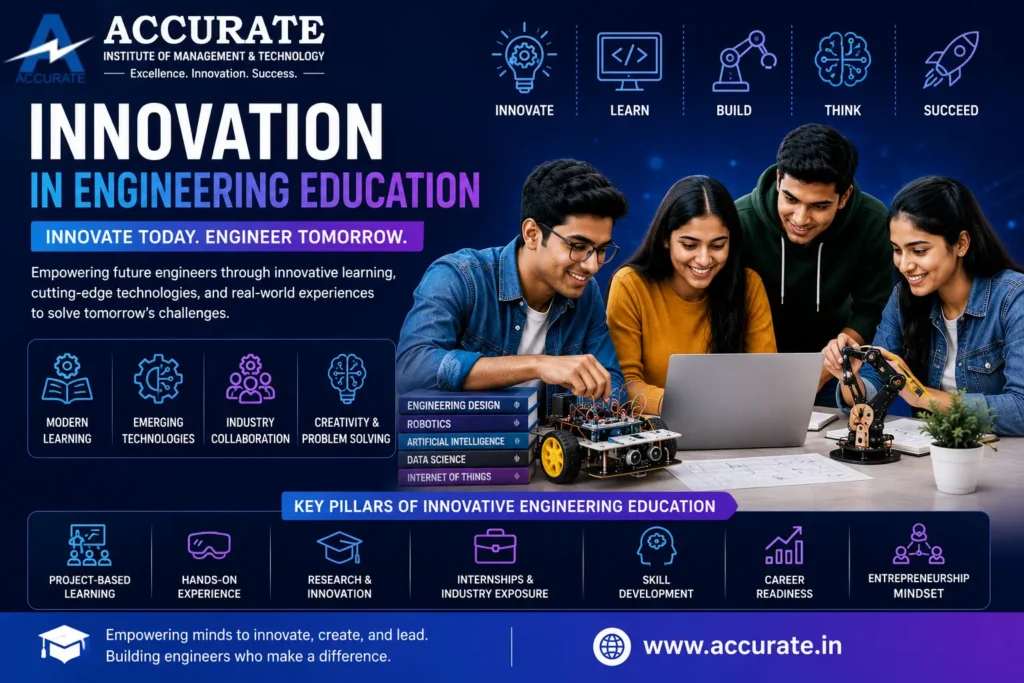
At Accurate Institute of Management & Technology, innovation is integrated into the engineering learning process through project-based education, modern laboratories, technical workshops, industry interaction, internships, research activities, and technology-enabled classrooms. These initiatives help students develop technical expertise while encouraging innovation and lifelong learning.
This comprehensive guide explores the importance of innovation in engineering education, emerging teaching methodologies, industry trends, future technologies, career benefits, and how students can thrive in an innovation-driven learning environment.
Quick Answer: What Is Innovation in Engineering Education?
Innovation in engineering education refers to the use of modern teaching methods, advanced technologies, practical learning, research, industry collaboration, and project-based education to prepare engineering students for real-world challenges and future careers.
Key elements include:
- Project-Based Learning
- Smart Classrooms
- Artificial Intelligence Tools
- Industry Collaboration
- Research and Innovation
- Technical Workshops
- Internships
- Digital Learning Platforms
Innovative engineering education improves employability, creativity, and problem-solving skills.
Understanding Innovation in Engineering Education
Innovation in engineering education means continuously improving how students learn, apply knowledge, and develop professional skills.
Rather than focusing only on theoretical concepts, innovative education encourages students to:
- Solve Real Problems
- Build Practical Projects
- Collaborate with Teams
- Explore Emerging Technologies
- Think Creatively
This prepares graduates for the evolving demands of industry.
Why Innovation Is Essential in Engineering Education
The engineering profession is changing rapidly because of:
- Artificial Intelligence
- Cloud Computing
- Data Science
- Robotics
- Automation
- Internet of Things (IoT)
- Sustainable Technologies
Traditional teaching alone cannot fully prepare students for these advancements.
Innovation ensures engineering graduates remain industry-ready and future-focused.
Evolution of Engineering Education
Engineering education has progressed through several stages:
Traditional Learning
- Classroom Lectures
- Textbooks
- Written Examinations
Practical Learning
- Laboratory Sessions
- Workshops
- Industrial Visits
Digital Learning
- Online Platforms
- Virtual Laboratories
- Interactive Simulations
Future Learning
- AI-Assisted Education
- Smart Classrooms
- Industry Collaboration
- Research-Based Learning
Each stage has enhanced the learning experience.
Key Components of Innovative Engineering Education
Project-Based Learning
Students learn by designing and developing real-world solutions.
Examples include:
- Smart Applications
- Robotics Projects
- IoT Devices
- Renewable Energy Models
Projects strengthen technical and analytical abilities.
Experiential Learning
Students gain knowledge through direct experience.
Methods include:
- Practical Experiments
- Field Visits
- Live Projects
- Research Activities
Experiential learning improves knowledge retention.
Industry Collaboration
Engineering institutions increasingly collaborate with industries.
Benefits include:
- Guest Lectures
- Industrial Visits
- Live Case Studies
- Internship Opportunities
Industry interaction helps students understand professional expectations.
Smart Classrooms
Technology-enabled classrooms improve student engagement.
Features include:
- Digital Boards
- Multimedia Content
- Interactive Sessions
- Virtual Demonstrations
Smart classrooms create dynamic learning environments.
Role of Artificial Intelligence in Engineering Education
Artificial Intelligence supports innovation by enabling:
- Personalized Learning
- Intelligent Tutoring
- Automated Assessment
- Virtual Assistants
AI helps students learn more efficiently and effectively.
Importance of Practical Learning
Innovation emphasizes applying knowledge through:
- Laboratory Work
- Engineering Projects
- Prototype Development
- Simulations
Practical learning bridges the gap between theory and application.
Research and Innovation
Research encourages students to:
- Explore New Technologies
- Develop Innovative Solutions
- Solve Engineering Challenges
Research-oriented education promotes creativity and scientific thinking.
Entrepreneurship in Engineering Education
Innovation also encourages entrepreneurial thinking.
Students learn to:
- Identify Opportunities
- Develop Products
- Launch Startups
- Solve Market Problems
Engineering entrepreneurship contributes to economic growth.
Emerging Technologies Transforming Engineering Education
Artificial Intelligence
AI supports intelligent learning systems and advanced research.
Internet of Things (IoT)
IoT projects teach students about connected devices and automation.
Cloud Computing
Cloud platforms support collaborative learning and scalable computing.
Robotics
Students develop automation solutions using robotics technologies.
Data Science
Engineering students learn to analyze and interpret complex datasets.
Cyber Security
Digital security has become an essential part of engineering education.
Benefits of Innovation in Engineering Education
Improved Problem-Solving Skills
Students learn to:
- Analyze Situations
- Develop Solutions
- Evaluate Outcomes
Enhanced Creativity
Innovation encourages original thinking and experimentation.
Better Employability
Employers value graduates with practical experience and technical expertise.
Industry Readiness
Students become familiar with modern technologies and workplace expectations.
Lifelong Learning
Innovation fosters curiosity and continuous skill development.
Skills Developed Through Innovative Engineering Education
Students build expertise in:
- Programming
- Communication
- Leadership
- Critical Thinking
- Teamwork
- Creativity
- Technical Analysis
- Project Management
These competencies are highly valued across industries.
Role of Digital Learning Platforms
Online learning platforms provide:
- Flexible Education
- Interactive Resources
- Global Learning Opportunities
Digital learning complements classroom education.
Importance of Technical Workshops
Workshops expose students to:
- Artificial Intelligence
- Cloud Computing
- Robotics
- Cyber Security
- Machine Learning
Hands-on experiences improve technical competence.
Innovation Through Engineering Competitions
Students participate in:
- Hackathons
- Robotics Competitions
- Coding Challenges
- Innovation Contests
Competitions strengthen practical skills and confidence.
Industry Internships
Internships provide:
- Professional Experience
- Workplace Exposure
- Technical Skill Development
Practical experience enhances employability.
Role of Faculty in Innovation
Modern engineering educators act as:
- Mentors
- Researchers
- Facilitators
- Industry Connectors
Faculty guide students toward innovation and career success.
Challenges in Engineering Education
Some common challenges include:
- Rapid Technology Changes
- Skill Gaps
- Limited Industry Exposure
Innovation helps address these challenges effectively.
Future Trends in Engineering Education
Future engineering education will increasingly adopt:
- Artificial Intelligence
- Virtual Reality
- Digital Twins
- Smart Laboratories
- Industry 4.0
- Personalized Learning
These technologies will redefine engineering education.
Career Benefits of Innovative Learning
Graduates benefit through:
- Better Job Opportunities
- Global Career Prospects
- Higher Confidence
- Strong Technical Skills
- Leadership Development
Innovation supports long-term professional success.
How Engineering Students Can Become More Innovative
Students should:
- Build Projects
- Join Technical Clubs
- Participate in Hackathons
- Complete Internships
- Learn Emerging Technologies
- Pursue Certifications
Continuous learning is essential for innovation.
How Accurate Institute Promotes Innovation
At Accurate Institute of Management & Technology, innovation is integrated throughout engineering education.
Industry-Oriented Curriculum
Programs align with emerging technology trends.
Modern Laboratories
Students gain practical technical experience.
Project-Based Learning
Real-world projects strengthen problem-solving abilities.
Technical Workshops
Students explore AI, IoT, Robotics, Cyber Security, Cloud Computing, and Data Science.
Industry Interaction
Experts provide valuable career insights and mentorship.
Research and Innovation Activities
Students are encouraged to explore creative engineering solutions.
Internship Opportunities
Industry exposure improves professional readiness.
Placement Support
Career development initiatives help students prepare for successful engineering careers.
Why is innovation important in engineering education?
Innovation in engineering education helps students develop practical skills, creativity, technical expertise, problem-solving abilities, and industry readiness. It combines modern technologies, project-based learning, research, internships, and industry collaboration to prepare graduates for successful engineering careers.
Conclusion
Innovation has become the foundation of modern engineering education. As industries continue evolving through Artificial Intelligence, automation, robotics, cloud computing, and digital transformation, engineering institutions must provide learning experiences that prepare students for the future.
Innovative education goes beyond theoretical instruction by emphasizing practical learning, project development, research, entrepreneurship, technical workshops, internships, and industry engagement. This approach helps students become confident, creative, and industry-ready professionals capable of solving real-world challenges.
At Accurate Institute of Management & Technology, engineering students benefit from an innovation-driven learning environment supported by modern infrastructure, experienced faculty, industry partnerships, and skill development initiatives. These experiences empower students to succeed in competitive global industries and contribute meaningfully to technological advancement.
For aspiring engineers, embracing innovation is the key to building a successful, future-ready career.
Frequently Asked Questions (FAQs)
What is innovation in engineering education?
Innovation in engineering education involves modern teaching methods, practical learning, research, and technology integration to improve student learning outcomes.
Why is innovation important for engineering students?
It develops technical skills, creativity, industry readiness, and problem-solving abilities.
How does project-based learning support innovation?
Projects allow students to apply theoretical knowledge to real-world engineering challenges.
What technologies are transforming engineering education?
Artificial Intelligence, Robotics, Cloud Computing, IoT, Data Science, Virtual Reality, and Industry 4.0.
How do internships contribute to innovation?
Internships provide practical industry experience and exposure to real engineering environments.
What skills do innovative engineering programs develop?
Programming, communication, teamwork, leadership, analytical thinking, creativity, and technical expertise.
How does Accurate Institute promote innovation?
Through project-based learning, modern laboratories, workshops, industry interaction, internships, research activities, and placement support.
What is the future of engineering education?
Engineering education will continue evolving with AI-powered learning, smart classrooms, digital laboratories, and stronger industry collaboration.