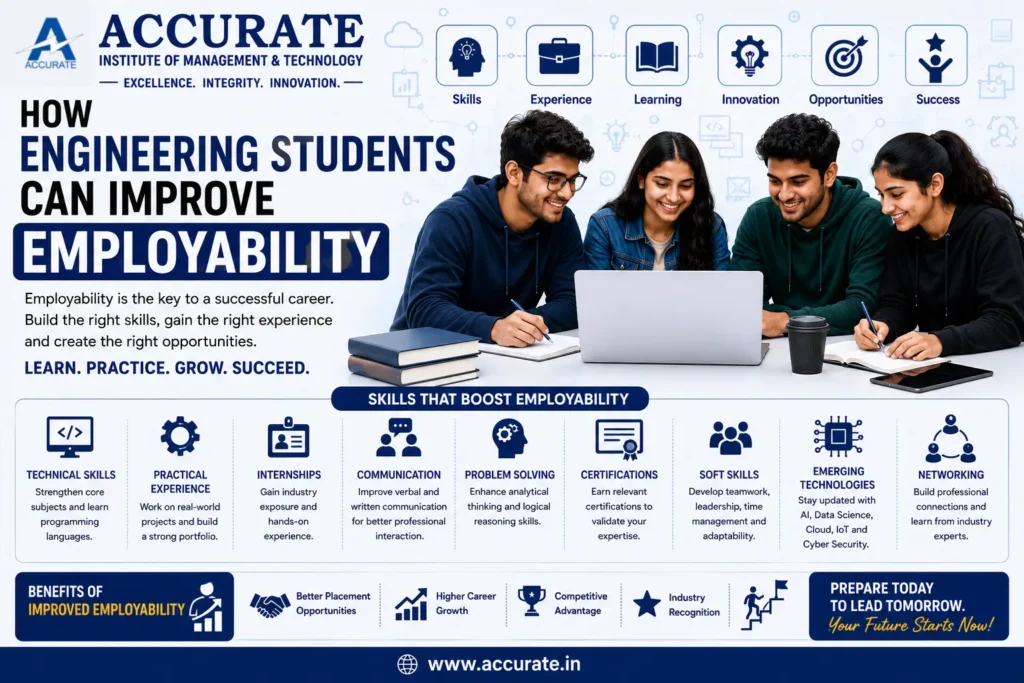

The engineering sector continues to be one of the most dynamic and opportunity-rich career domains. However, with increasing competition and rapidly evolving technologies, securing a job today requires much more than earning a B.Tech degree. Employers are looking for graduates who possess a combination of technical expertise, practical experience, communication skills, problem-solving abilities, and industry readiness.
The concept of employability has become a key factor in career success. Employability refers to a student’s ability to gain, maintain, and grow within a professional role. It encompasses technical knowledge, workplace skills, adaptability, and a commitment to continuous learning.
As industries adopt technologies such as Artificial Intelligence (AI), Machine Learning, Data Science, Cloud Computing, Cyber Security, Automation, and the Internet of Things (IoT), engineering students must develop competencies that align with industry requirements.
At Accurate Institute of Management & Technology, students are encouraged to focus on practical learning, skill development, internships, projects, and industry exposure to improve employability and prepare for successful careers.
This comprehensive guide explores how engineering students can enhance employability, stand out during placements, and build strong professional careers in today’s competitive job market.
Quick Answer: How Can Engineering Students Improve Employability?
Engineering students can improve employability by:
- Developing strong technical skills
- Learning programming languages
- Working on real-world projects
- Completing internships
- Improving communication skills
- Building professional networks
- Learning emerging technologies
- Earning industry certifications
- Participating in workshops and competitions
- Enhancing problem-solving abilities
Employers value candidates who combine technical expertise with practical and professional skills.
Understanding Employability in Engineering
Employability is more than academic performance.
It includes:
- Technical Competence
- Practical Experience
- Professional Skills
- Adaptability
- Continuous Learning
- Industry Awareness
Students who focus on holistic development often have better placement outcomes.
Why Employability Matters
Today’s employers seek graduates who can contribute immediately.
Companies want professionals who:
- Solve Problems
- Work in Teams
- Learn Quickly
- Adapt to New Technologies
- Communicate Effectively
Strong employability skills improve career prospects and long-term professional growth.
Develop Strong Technical Skills
Master Engineering Fundamentals
Students should have a solid understanding of core subjects within their engineering discipline.
Examples include:
Computer Science Engineering
- Data Structures
- Algorithms
- Operating Systems
- Database Management Systems
Learn Programming Skills
Programming is one of the most valuable skills for modern engineers.
Popular languages include:
- Python
- Java
- C++
- C
- JavaScript
Programming helps students:
- Develop Applications
- Automate Processes
- Solve Technical Problems
Coding proficiency significantly enhances employability.
Build Expertise in Emerging Technologies
Employers increasingly seek candidates with knowledge of advanced technologies.
Artificial Intelligence
AI is transforming industries through intelligent automation and data-driven solutions.
Machine Learning
Machine learning enables systems to learn and improve from data.
Data Science
Data-driven decision-making is now central to organizational success.
Cloud Computing
Cloud technologies support modern digital infrastructure.
Cyber Security
Cybersecurity professionals protect digital assets and information.
Students who learn these technologies gain a competitive advantage.
Gain Practical Experience Through Projects
Why Projects Matter
Projects demonstrate the ability to apply theoretical concepts in real-world situations.
Benefits include:
- Hands-On Learning
- Problem-Solving Practice
- Portfolio Development
- Interview Discussion Material
Types of Projects Students Can Pursue
- Software Applications
- AI Models
- IoT Solutions
- Web Applications
- Automation Systems
- Research Projects
Practical project experience strengthens employability significantly.
Complete Internships
Internships provide valuable industry exposure.
Benefits of Internships
Real-World Experience
Students gain practical understanding of workplace operations.
Professional Networking
Internships help students build industry connections.
Skill Development
Students improve technical and professional competencies.
Placement Advantage
Employers often prefer candidates with internship experience.
Improve Communication Skills
Communication is one of the most important employability skills.
Students should develop:
Verbal Communication
Effective speaking and professional interaction.
Written Communication
Professional emails, reports, and documentation.
Presentation Skills
The ability to explain ideas confidently.
Strong communication skills improve interview performance and workplace effectiveness.
Develop Problem-Solving Abilities
Engineers are expected to solve complex challenges.
Problem-solving involves:
- Critical Thinking
- Analytical Reasoning
- Creativity
- Decision-Making
Students can improve problem-solving through:
- Coding Challenges
- Technical Competitions
- Project Work
- Case Studies
Strengthen Aptitude and Logical Reasoning
Many companies evaluate candidates through aptitude tests.
Key areas include:
- Quantitative Aptitude
- Logical Reasoning
- Analytical Ability
- Verbal Skills
Regular practice improves performance during placement assessments.
Build Professional Skills
Teamwork
Engineering projects often involve collaboration.
Students should learn to:
- Work Effectively with Others
- Share Responsibilities
- Resolve Conflicts
Leadership
Leadership qualities help students stand out.
Leadership involves:
- Initiative
- Responsibility
- Team Coordination
- Decision-Making
Time Management
Effective time management improves productivity and performance.
Students should learn to:
- Prioritize Tasks
- Meet Deadlines
- Balance Academic and Professional Activities
Earn Industry Certifications
Certifications validate technical expertise and commitment to learning.
Popular certification areas include:
- Cloud Computing
- Data Analytics
- Cyber Security
- Programming
- Artificial Intelligence
Certifications strengthen resumes and improve employability.
Participate in Technical Workshops
Workshops provide practical exposure to modern technologies.
Benefits include:
- Skill Development
- Industry Insights
- Networking Opportunities
- Hands-On Learning
At Accurate Institute, workshops play a key role in student development.
Engage in Hackathons and Competitions
Technical competitions encourage innovation and practical problem-solving.
Benefits include:
- Enhanced Technical Skills
- Team Collaboration
- Creative Thinking
- Industry Recognition
Participation demonstrates initiative and enthusiasm.
Build a Strong Professional Network
Networking helps students discover opportunities and gain career insights.
Students can network through:
- Industry Events
- Technical Conferences
- Seminars
- Alumni Interactions
Professional relationships often lead to internships and job opportunities.
Create a Strong Resume
A well-structured resume creates a positive first impression.
Students should include:
- Technical Skills
- Projects
- Internships
- Certifications
- Achievements
Resumes should be concise, professional, and tailored to job roles.
Prepare for Technical Interviews
Technical interviews assess:
- Subject Knowledge
- Coding Skills
- Problem-Solving Abilities
- Communication Skills
Preparation strategies include:
- Mock Interviews
- Coding Practice
- Technical Revision
- HR Interview Preparation
Stay Updated With Industry Trends
Technology evolves rapidly.
Students should regularly learn about:
- Emerging Technologies
- Industry Developments
- Market Trends
Continuous learning improves adaptability and employability.
Importance of Industry Exposure
Industry interaction helps students understand workplace expectations.
Useful activities include:
- Guest Lectures
- Industrial Visits
- Corporate Workshops
- Expert Sessions
Industry exposure bridges the gap between academics and professional requirements.
Role of Innovation and Research
Innovation is increasingly valued by employers.
Students involved in:
- Research Projects
- Patent Development
- Product Innovation
- Technology Solutions
often gain additional recognition.
Digital Skills for Future Employability
Future engineers should develop expertise in:
- Artificial Intelligence
- Machine Learning
- Cloud Technologies
- Data Analytics
- Cyber Security
- Internet of Things
These skills align with industry demand and future career opportunities.
Common Mistakes That Reduce Employability
Students should avoid:
- Ignoring Soft Skills
- Lack of Practical Experience
- Weak Communication
- Limited Industry Awareness
- Poor Interview Preparation
Addressing these issues improves placement readiness.
How Accurate Institute Supports Employability
At Accurate Institute of Management & Technology, employability enhancement is a key focus area.
Practical Learning Environment
Hands-on experiences strengthen technical understanding.
Industry-Oriented Curriculum
Programs align with current industry requirements.
Technical Workshops
Students gain exposure to emerging technologies.
Internship Opportunities
Industry experiences improve career readiness.
Placement Training
Comprehensive preparation for recruitment processes.
Skill Development Programs
Students enhance technical and professional competencies.
Future of Employability in Engineering
The future workplace will increasingly value:
- Digital Skills
- Innovation
- Adaptability
- Continuous Learning
Students who embrace these qualities will remain competitive and successful.
Conclusion
Improving employability requires a proactive approach to learning and skill development. Engineering students who focus on technical expertise, practical experience, communication skills, problem-solving abilities, internships, certifications, and industry exposure position themselves for greater career success.
The job market is evolving rapidly, and employers seek candidates who are adaptable, innovative, and capable of contributing immediately. By developing a balanced combination of technical and professional skills, students can significantly improve placement opportunities and long-term career growth.
At Accurate Institute of Management & Technology, students receive the guidance, practical exposure, and career-focused support necessary to become industry-ready professionals. Through continuous learning and skill enhancement, engineering students can confidently build rewarding careers in today’s technology-driven world.
Frequently Asked Questions (FAQs)
What is employability in engineering?
Employability refers to a student’s ability to secure, maintain, and grow in professional roles through technical and professional skills.
How can engineering students improve employability?
By developing technical skills, gaining practical experience, improving communication, completing internships, and earning certifications.
Are internships important for employability?
Yes. Internships provide real-world experience and improve job readiness.
Which technical skills are most valuable?
Programming, AI, Data Science, Cloud Computing, Cyber Security, and IoT skills are highly sought after.
Do communication skills affect placements?
Absolutely. Strong communication skills improve interview performance and workplace effectiveness.
Why are projects important for employability?
Projects demonstrate practical knowledge and problem-solving abilities.
How do certifications help?
Certifications validate expertise and strengthen resumes.
How does Accurate Institute support employability?
Through practical learning, workshops, internships, industry interaction, placement training, and skill development programs.