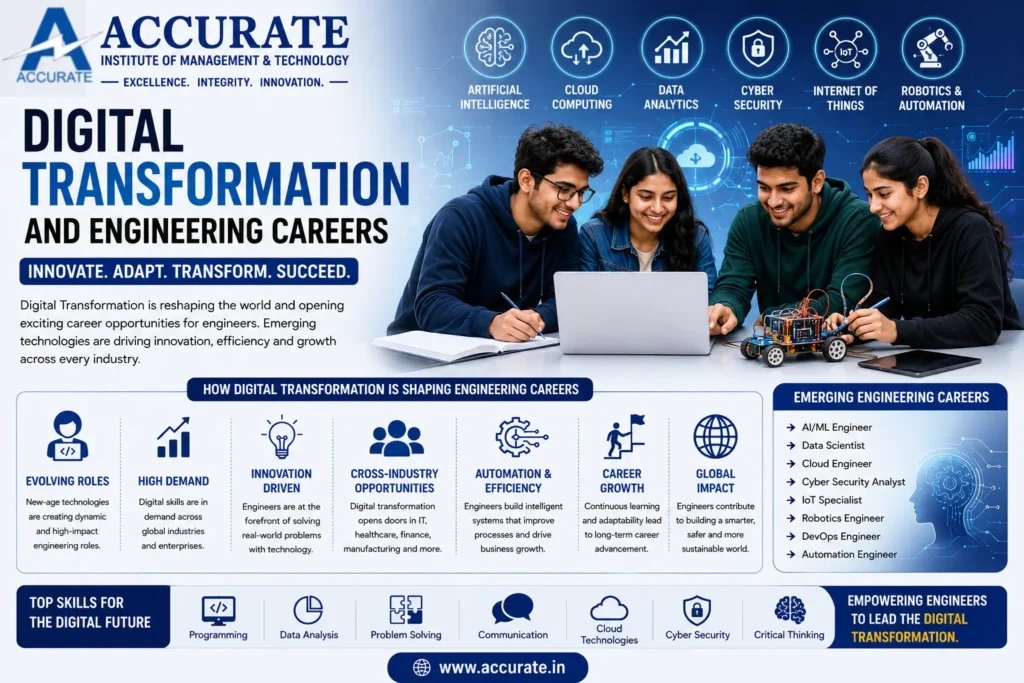

The world is undergoing a rapid digital revolution. Businesses, governments, healthcare organizations, educational institutions, and industries across the globe are embracing technology to improve efficiency, productivity, customer experience, and innovation. This large-scale adoption of digital technologies is known as Digital Transformation.
Digital Transformation is no longer a future trend—it is the present reality. Technologies such as Artificial Intelligence (AI), Cloud Computing, Data Analytics, Internet of Things (IoT), Cyber Security, Robotics, Blockchain, and Automation are transforming how organizations operate and compete in today’s digital economy.
As a result, engineering careers have evolved significantly. Modern engineers are no longer limited to traditional technical roles. They are becoming innovators, digital strategists, technology architects, software developers, cybersecurity experts, data scientists, and automation specialists who drive business transformation and technological advancement.
For students pursuing engineering, understanding digital transformation is essential because it directly impacts future career opportunities. At Accurate Institute of Management & Technology, engineering education is aligned with industry trends and emerging technologies, helping students develop the skills required to thrive in a digitally connected world.
This comprehensive guide explores digital transformation, its impact on engineering careers, the technologies driving change, and why engineering remains one of the most future-ready professions in the digital age.
Quick Answer: What Is Digital Transformation?
Digital Transformation is the process of integrating digital technologies into business operations, products, services, and customer experiences to improve efficiency, innovation, and competitiveness.
It involves technologies such as:
- Artificial Intelligence
- Machine Learning
- Cloud Computing
- Data Analytics
- Cyber Security
- Internet of Things (IoT)
- Automation
- Robotics
These technologies create new opportunities for engineering professionals across industries.
Understanding Digital Transformation
Digital Transformation goes beyond simply adopting new software or digital tools.
It involves:
- Reimagining Business Processes
- Improving Customer Experiences
- Automating Operations
- Leveraging Data for Decision-Making
- Creating Digital Products and Services
- Enhancing Organizational Efficiency
Organizations that successfully embrace digital transformation often achieve greater innovation, agility, and market competitiveness.
Why Digital Transformation Matters Today
Several factors are driving digital transformation worldwide:
Rapid Technological Advancement
Emerging technologies continue to evolve at an unprecedented pace.
Changing Customer Expectations
Consumers demand faster, smarter, and more personalized experiences.
Increased Competition
Organizations use digital technologies to stay ahead in competitive markets.
Data-Driven Decision Making
Businesses rely on analytics and insights to improve performance.
Operational Efficiency
Automation and digital solutions reduce costs and improve productivity.
The Relationship Between Digital Transformation and Engineering
Engineers are at the center of digital transformation.
They design, develop, implement, and maintain the technologies that power modern organizations.
Engineering professionals contribute to:
- Software Development
- Data Analytics
- Cyber Security
- Cloud Infrastructure
- Smart Manufacturing
- Intelligent Systems
- Automation Solutions
Without engineers, digital transformation would not be possible.
Technologies Driving Digital Transformation
Artificial Intelligence (AI)
Artificial Intelligence enables machines to perform tasks that traditionally require human intelligence.
Applications include:
- Virtual Assistants
- Predictive Analytics
- Intelligent Automation
- Recommendation Systems
Engineering Career Opportunities
- AI Engineer
- Machine Learning Engineer
- Data Scientist
- AI Research Associate
AI is one of the fastest-growing career domains in engineering.
Machine Learning
Machine Learning allows systems to learn from data and improve performance over time.
Industries using ML include:
- Healthcare
- Banking
- Retail
- Manufacturing
Career Roles
- Machine Learning Engineer
- Predictive Analytics Specialist
- Data Engineer
Cloud Computing
Cloud technology enables organizations to store, manage, and process data remotely.
Benefits include:
- Scalability
- Cost Efficiency
- Flexibility
- Security
Engineering Opportunities
- Cloud Engineer
- Cloud Architect
- DevOps Engineer
- Infrastructure Specialist
Cloud expertise is highly valued in modern organizations.
Data Science and Analytics
Data has become one of the most valuable organizational assets.
Data science helps businesses:
- Understand Customers
- Predict Trends
- Improve Operations
- Make Strategic Decisions
Career Opportunities
- Data Scientist
- Data Analyst
- Business Intelligence Specialist
Cyber Security
As digital adoption grows, protecting information becomes increasingly important.
Cyber Security focuses on:
- Network Protection
- Data Security
- Risk Management
- Threat Prevention
Career Roles
- Cyber Security Analyst
- Ethical Hacker
- Security Engineer
- Information Security Consultant
Internet of Things (IoT)
IoT connects devices through the internet to create intelligent systems.
Examples include:
- Smart Homes
- Smart Cities
- Industrial Automation
- Healthcare Monitoring
Career Opportunities
- IoT Engineer
- Embedded Systems Developer
- Automation Specialist
Robotics and Automation
Automation technologies improve efficiency and productivity.
Applications include:
- Manufacturing
- Logistics
- Healthcare
- Agriculture
Engineering Careers
- Robotics Engineer
- Automation Engineer
- Systems Integrator
How Digital Transformation Is Changing Engineering Careers
Greater Demand for Technology Skills
Modern employers seek engineers with expertise in:
- Programming
- Data Analysis
- Cloud Platforms
- AI Technologies
- Cyber Security
Technical proficiency has become increasingly important.
Increased Focus on Innovation
Engineers are expected to develop innovative solutions that improve organizational performance.
Innovation-driven engineers often enjoy better career growth opportunities.
Cross-Functional Collaboration
Digital transformation requires collaboration between:
- Engineers
- Business Teams
- Data Analysts
- Product Managers
Communication and teamwork skills are now essential.
Continuous Learning Requirements
Technology evolves rapidly.
Engineers must continuously update their knowledge and skills to remain competitive.
Engineering Careers in the Digital Era
Software Engineer
Software engineers build applications and systems that power digital businesses.
Responsibilities
- Application Development
- System Design
- Software Testing
Data Scientist
Data scientists analyze large datasets to generate insights and predictions.
Responsibilities
- Data Analysis
- Machine Learning
- Predictive Modeling
AI Engineer
AI engineers develop intelligent systems capable of learning and decision-making.
Cloud Engineer
Cloud engineers manage digital infrastructure and cloud environments.
Cyber Security Engineer
Cyber security professionals protect organizations from digital threats.
DevOps Engineer
DevOps engineers streamline software development and deployment processes.
IoT Engineer
IoT professionals design connected systems and smart devices.
Why Engineering Students Should Embrace Digital Transformation
Engineering students who understand digital transformation gain significant advantages.
Improved Employability
Digital skills increase career opportunities.
Better Salary Potential
Emerging technology professionals often earn competitive salaries.
Global Opportunities
Digital transformation skills are in demand worldwide.
Career Flexibility
Engineers can work across industries and domains.
Skills Engineering Students Need for the Digital Future
Technical Skills
Students should develop:
- Programming Skills
- Cloud Computing Knowledge
- Data Analysis Abilities
- Cyber Security Awareness
- AI Fundamentals
Soft Skills
Professional competencies include:
- Communication
- Leadership
- Teamwork
- Critical Thinking
- Adaptability
Employers increasingly value these skills.
Role of Engineering Education in Digital Transformation
Engineering institutions play a critical role in preparing students for digital careers.
Modern education should include:
- Practical Learning
- Project-Based Training
- Industry Exposure
- Technology Workshops
- Innovation Programs
How Accurate Institute Supports Digital Career Development
At Accurate Institute of Management & Technology, students receive future-focused engineering education designed to align with industry requirements.
Industry-Oriented Curriculum
Programs incorporate emerging technologies and practical applications.
Technical Workshops
Students gain hands-on exposure to modern tools and technologies.
Project-Based Learning
Real-world projects strengthen practical understanding.
Industry Interaction
Expert sessions provide valuable industry insights.
Skill Development Programs
Students enhance both technical and professional competencies.
Future Scope of Digital Engineering Careers
The future of engineering will be driven by:
- Artificial Intelligence
- Smart Manufacturing
- Industry 4.0
- Digital Healthcare
- Renewable Energy
- Smart Infrastructure
Engineering professionals with digital expertise will continue to play a critical role in shaping the future economy.
Why Engineering Remains a Future-Proof Career
Engineering continues to offer:
- Strong Demand
- Technological Relevance
- Innovation Opportunities
- Global Mobility
- Career Growth
As digital transformation accelerates, engineering careers become even more valuable.
Conclusion
Digital Transformation is reshaping industries, organizations, and career opportunities worldwide. Engineers are at the forefront of this transformation, designing the technologies and systems that power modern businesses and societies.
From Artificial Intelligence and Cloud Computing to Cyber Security and Data Science, engineering professionals play a vital role in driving innovation and solving complex challenges. Students who embrace digital technologies and continuously develop their skills will enjoy excellent career prospects in the future.
At Accurate Institute of Management & Technology, students are equipped with industry-relevant knowledge, practical skills, and technological expertise that prepare them for successful careers in the digital age.
As the world becomes increasingly connected and technology-driven, engineering remains one of the most exciting, impactful, and future-ready career choices available.
Frequently Asked Questions (FAQs)
What is digital transformation?
Digital Transformation is the integration of digital technologies into business processes to improve efficiency, innovation, and customer experiences.
Why is digital transformation important for engineers?
Engineers develop and manage the technologies that enable digital transformation across industries.
Which technologies drive digital transformation?
Artificial Intelligence, Machine Learning, Cloud Computing, Data Analytics, Cyber Security, IoT, and Automation.
What engineering careers are growing because of digital transformation?
AI Engineer, Data Scientist, Cloud Engineer, Cyber Security Specialist, IoT Engineer, and DevOps Engineer.
Does digital transformation create new job opportunities?
Yes. It generates demand for skilled technology professionals across industries.
What skills should engineering students develop?
Programming, Data Analytics, AI, Cloud Computing, Cyber Security, Communication, and Problem-Solving skills.
How does Accurate Institute prepare students for digital careers?
Through practical learning, industry exposure, technical workshops, projects, and skill development programs.
Is engineering still a good career in the digital age?
Absolutely. Engineering remains one of the most future-focused and high-demand professions worldwide.