
A B.Tech degree provides students with technical knowledge, engineering fundamentals, and practical exposure required for a successful career. However, in today’s highly competitive job market, a degree alone is often not enough to secure top placement opportunities. Recruiters are increasingly looking for candidates who possess a combination of technical expertise, practical skills, problem-solving abilities, communication skills, and industry readiness.
As industries continue to adopt emerging technologies such as Artificial Intelligence, Data Science, Cloud Computing, Cyber Security, Automation, and the Internet of Things (IoT), the expectations from engineering graduates are evolving rapidly. Companies seek professionals who can adapt quickly, work collaboratively, solve real-world problems, and contribute effectively from day one.
At Accurate Institute of Management & Technology, students are encouraged to develop both technical and professional skills throughout their B.Tech journey. Through practical learning, industry interaction, workshops, internships, projects, and placement training programs, students gain the competencies needed to stand out in recruitment processes.
This comprehensive guide explores the most important skills in B.Tech that significantly improve placement chances and help students build successful engineering careers.
Quick Answer: Which Skills Improve Placement Chances in B.Tech?
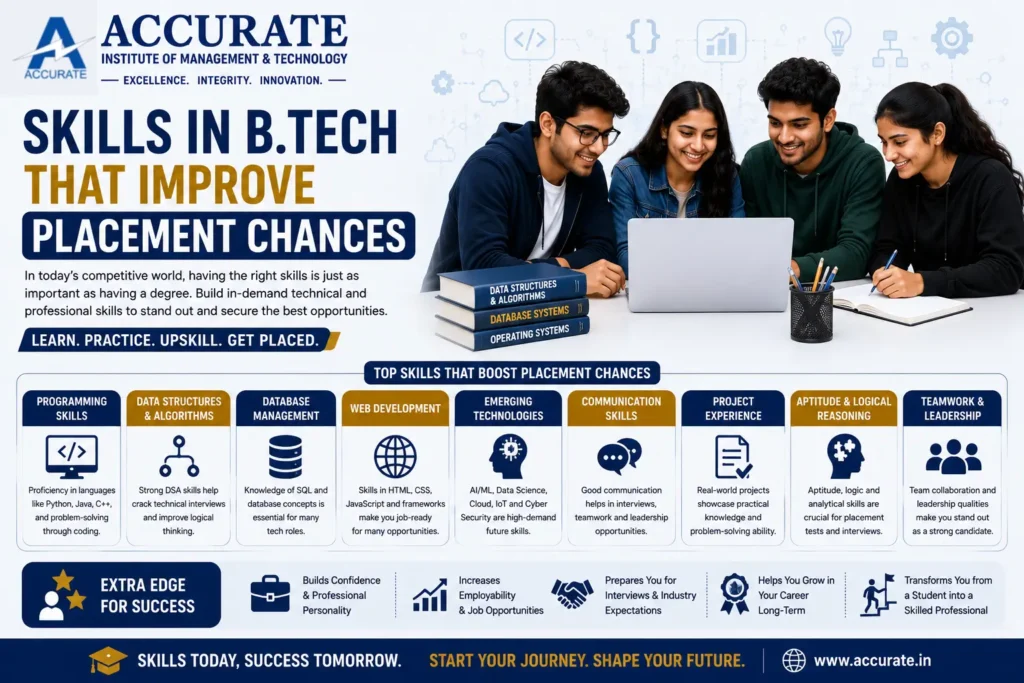
The most important placement-oriented skills include:
- Programming Skills
- Problem-Solving Ability
- Communication Skills
- Data Structures and Algorithms
- Technical Project Experience
- Aptitude and Logical Reasoning
- Teamwork and Leadership
- Industry Knowledge
- Internship Experience
- Emerging Technology Skills
Students who develop these competencies are often better prepared for placements and career growth.
Why Skills Matter More Than Ever
Modern recruiters evaluate candidates based on their ability to apply knowledge rather than simply possessing academic qualifications.
Companies want employees who can:
- Learn quickly
- Solve problems efficiently
- Collaborate effectively
- Adapt to new technologies
- Contribute to organizational goals
Developing relevant skills significantly improves employability and placement success.
Technical Skills That Improve Placement Chances
1. Programming Skills
Programming is one of the most valuable skills for engineering students, particularly those pursuing Computer Science, Information Technology, Artificial Intelligence, and related fields.
Popular programming languages include:
- Python
- Java
- C++
- C
- JavaScript
Programming skills help students:
- Build applications
- Automate tasks
- Develop software solutions
- Solve technical problems
Recruiters often assess coding abilities during placement drives.
2. Data Structures and Algorithms (DSA)
Strong DSA knowledge is essential for technical interviews.
Students learn:
- Arrays
- Linked Lists
- Trees
- Graphs
- Sorting Algorithms
- Searching Techniques
Benefits include:
- Improved problem-solving
- Better coding efficiency
- Enhanced interview performance
Top technology companies frequently evaluate DSA skills during recruitment.
3. Database Management
Most organizations rely on databases to manage information.
Students should understand:
- SQL
- Database Design
- Data Retrieval
- Database Optimization
Database skills are highly valuable across industries.
4. Web Development Skills
Web development remains one of the most in-demand technical skills.
Students should learn:
- HTML
- CSS
- JavaScript
- Front-End Frameworks
- Back-End Technologies
Building web applications demonstrates practical expertise.
5. Software Development Knowledge
Understanding the software development lifecycle helps students become industry-ready.
Topics include:
- Software Design
- Testing
- Debugging
- Deployment
- Maintenance
Software development experience improves placement opportunities significantly.
Emerging Technology Skills
6. Artificial Intelligence and Machine Learning
AI and ML continue to transform industries.
Students familiar with:
- Machine Learning Models
- Data Analysis
- Predictive Analytics
- Deep Learning
often gain a competitive advantage in placements.
7. Data Science and Analytics
Data-driven decision-making has become essential for organizations.
Key skills include:
- Data Analysis
- Data Visualization
- Statistical Techniques
- Business Intelligence
These skills are highly sought after in modern workplaces.
8. Cloud Computing
Cloud technologies support digital transformation worldwide.
Students should understand:
- Cloud Platforms
- Virtualization
- Cloud Security
- Cloud Infrastructure
Cloud expertise significantly enhances employability.
9. Cyber Security
As cyber threats increase, organizations need skilled security professionals.
Important areas include:
- Network Security
- Ethical Hacking
- Information Security
- Risk Assessment
Cyber Security remains one of the fastest-growing career fields.
10. Internet of Things (IoT)
IoT connects devices and systems for intelligent operations.
Applications include:
- Smart Homes
- Smart Cities
- Healthcare Systems
- Industrial Automation
IoT knowledge provides excellent career opportunities.
Professional Skills That Improve Placement Chances
11. Communication Skills
Technical expertise alone is insufficient in today’s workplace.
Students must develop:
- Verbal Communication
- Written Communication
- Presentation Skills
- Professional Interaction
Strong communication skills help during interviews and workplace collaboration.
12. Problem-Solving Ability
Employers value candidates who can identify and solve challenges effectively.
Problem-solving skills involve:
- Analytical Thinking
- Logical Reasoning
- Decision-Making
- Creativity
Engineering graduates with strong problem-solving abilities are highly valued.
13. Critical Thinking
Critical thinking enables students to:
- Evaluate Information
- Analyze Situations
- Make Informed Decisions
This skill improves workplace performance and career growth.
14. Teamwork and Collaboration
Engineering projects often involve multiple stakeholders.
Students should learn to:
- Work in Teams
- Collaborate Effectively
- Share Responsibilities
- Resolve Conflicts
Teamwork skills are essential for professional success.
15. Leadership Skills
Leadership qualities help students stand out during placements.
Leadership involves:
- Initiative
- Responsibility
- Decision-Making
- Team Coordination
Employers appreciate candidates with leadership potential.
Academic and Project-Based Skills
16. Project Development Experience
Projects demonstrate practical knowledge and technical competence.
Students should work on:
- Software Projects
- AI Applications
- IoT Systems
- Research Projects
Strong project portfolios improve placement prospects significantly.
17. Research and Innovation Skills
Innovation drives technological advancement.
Students involved in:
- Research Activities
- Technical Competitions
- Innovation Challenges
often gain additional recognition during recruitment.
Placement-Specific Skills
18. Aptitude and Logical Reasoning
Most placement processes include aptitude assessments.
Students should develop:
- Quantitative Ability
- Logical Reasoning
- Analytical Skills
- Verbal Ability
Regular practice improves performance in recruitment tests.
19. Interview Skills
Technical interviews evaluate both knowledge and confidence.
Students should prepare for:
- Technical Questions
- HR Interviews
- Group Discussions
- Case-Based Scenarios
Mock interviews help build confidence and communication abilities.
20. Resume Building
A strong resume creates a positive first impression.
Students should highlight:
- Technical Skills
- Projects
- Certifications
- Internships
- Achievements
Professional resumes increase interview opportunities.
Importance of Internships
Internships provide real-world exposure and practical learning.
Benefits include:
- Industry Experience
- Skill Development
- Professional Networking
- Workplace Understanding
Many organizations prefer candidates with internship experience.
Role of Certifications in Placements
Certifications validate technical competencies.
Popular certifications include:
- Cloud Computing
- Data Analytics
- Cyber Security
- Programming
- Artificial Intelligence
Certifications strengthen resumes and improve placement prospects.
Importance of Industry Exposure
Industry interaction helps students understand employer expectations.
Useful activities include:
- Guest Lectures
- Workshops
- Industry Visits
- Technical Seminars
Industry exposure improves professional readiness.
How Accurate Institute Helps Students Improve Placement Chances
At Accurate Institute of Management & Technology, students receive comprehensive career development support.
Key initiatives include:
Practical Learning
Hands-on experiences through laboratories and projects.
Technical Workshops
Exposure to emerging technologies and industry tools.
Internship Support
Industry-based learning opportunities.
Placement Training
Preparation for aptitude tests, interviews, and group discussions.
Soft Skill Development
Communication and professional competency enhancement.
Industry Interaction
Expert sessions and networking opportunities.
Future Skills Engineering Students Should Learn
The future job market will increasingly value expertise in:
- Artificial Intelligence
- Machine Learning
- Data Science
- Cyber Security
- Cloud Computing
- Robotics
- Blockchain
- Automation
Students who continuously upgrade their skills will enjoy stronger career prospects.
Common Mistakes That Affect Placement Chances
Students should avoid:
- Ignoring Practical Learning
- Weak Communication Skills
- Lack of Project Experience
- Poor Interview Preparation
- Limited Industry Awareness
Addressing these areas significantly improves employability.
Conclusion
Success in placements depends on more than academic performance. Today’s employers seek candidates who possess a balanced combination of technical expertise, practical knowledge, communication skills, problem-solving abilities, and professional readiness.
By focusing on programming, emerging technologies, project development, internships, leadership, teamwork, and continuous learning, B.Tech students can substantially improve their placement opportunities.
At Accurate Institute of Management & Technology, students receive the guidance, training, practical exposure, and industry interaction necessary to develop these critical skills and achieve successful career outcomes.
Engineering graduates who invest in skill development today will be better positioned to secure rewarding job opportunities and thrive in the future workplace.
Frequently Asked Questions (FAQs)
Which skill is most important for B.Tech placements?
Programming and problem-solving skills are among the most important for technical placements.
Do internships improve placement chances?
Yes. Internships provide practical experience and enhance employability.
Are communication skills important for engineers?
Absolutely. Strong communication skills help during interviews and workplace collaboration.
How can students improve technical skills?
Through projects, workshops, certifications, internships, and practical learning.
Which emerging technologies should students learn?
Artificial Intelligence, Data Science, Cloud Computing, Cyber Security, and IoT.
Do certifications help during placements?
Yes. Certifications demonstrate specialized knowledge and commitment to learning.
Why is project experience important?
Projects showcase practical skills and problem-solving abilities to recruiters.
How does Accurate Institute support placements?
Through practical learning, placement training, internships, workshops, soft skill development, and industry interaction.